Voedselbank Game
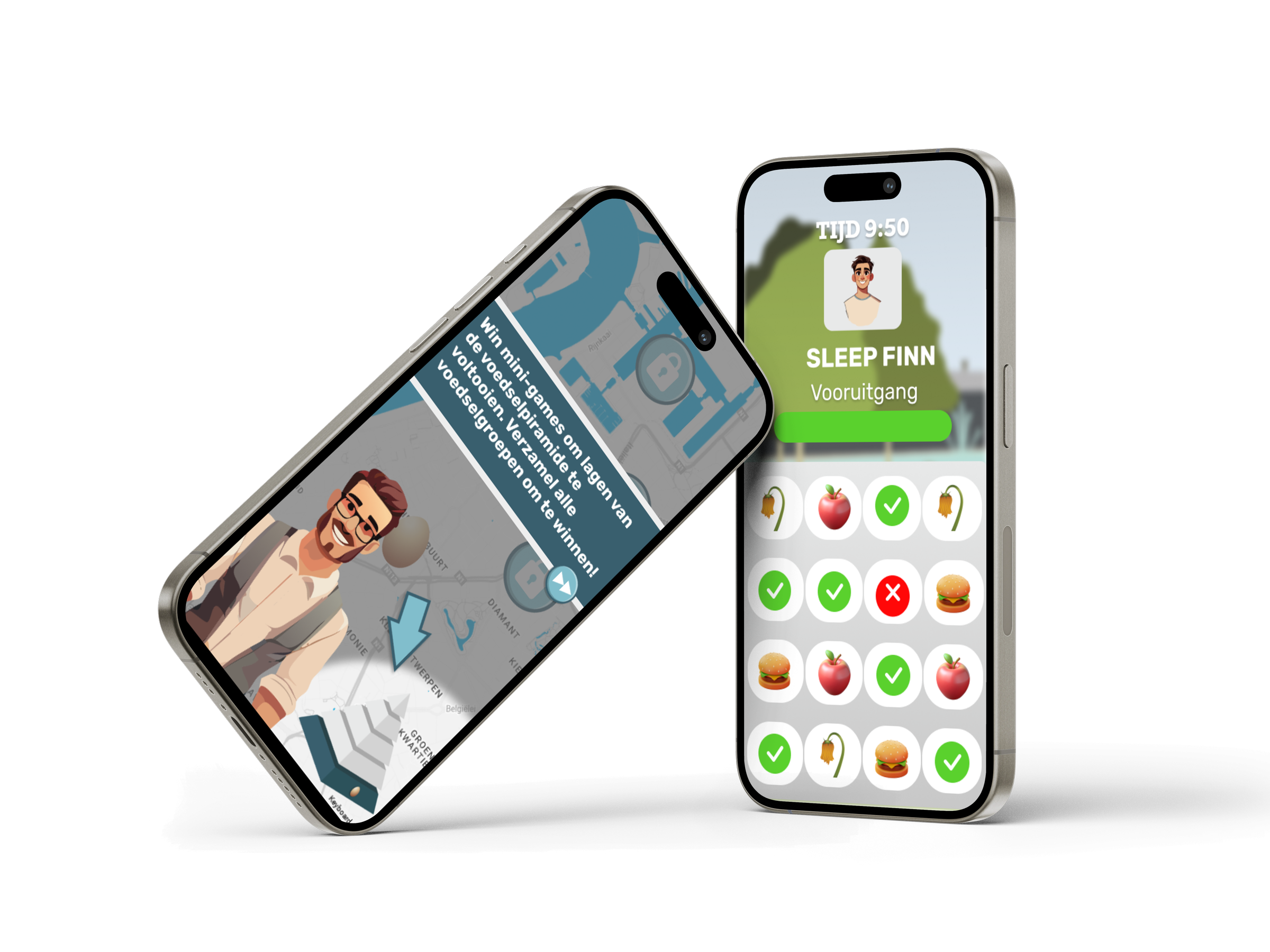
A location-based mobile game about food banks for young people in Antwerp: real places in the city unlock mini-games about food waste.
- Role
- UX/UI design
- Year
- 2024
- Duration
- About 12 weeks (late September to mid-December), in weekly sprints
- Team
- Team of 4
- Type
- School project (AP Hogeschool)
- Tools
- Figma, Code
- Deliverable
- A coded mobile game with a map; mini-games start when you arrive at a location
Challenge
Develop a location-based game in a team of four, around the theme "food bank". The target group was ours to choose.
Solution
A mobile game for young people (16–23) that takes them to real places in Antwerp, where mini-games teach them about food waste and food banks.
Result
A working game: the map and location triggers work, and the mini-games start on arrival.
Context
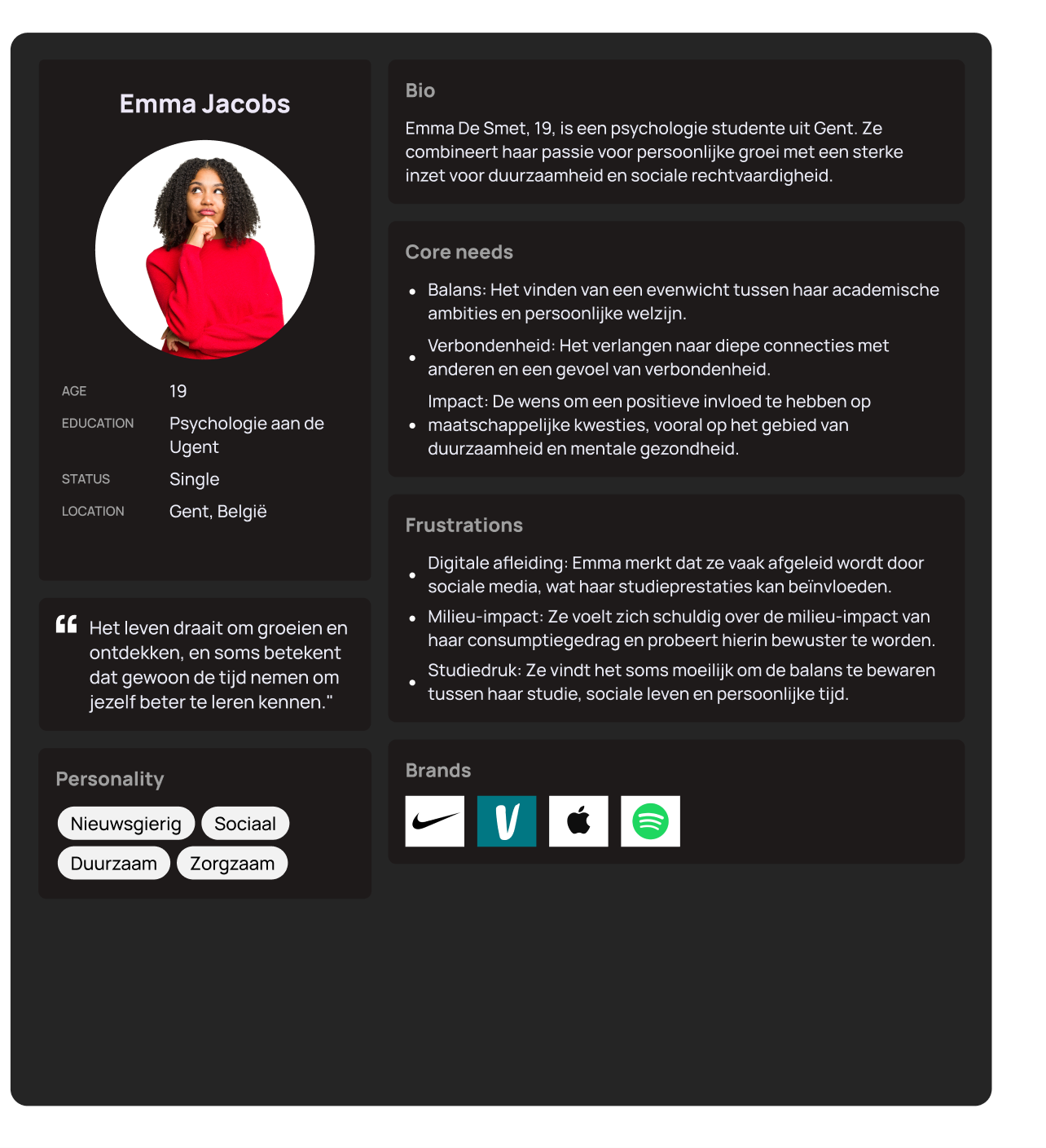
Young people are the biggest users of mobile games, they are often socially aware, and they respond well to gamification and interactive, educational content. That made them our target group: 16 to 23 years old.
The game's goal is awareness and education about food waste and poverty.
Research
- Desk research
- What a food bank does and the numbers behind it, trends in mobile games, business models, game genres, and location-based examples such as Pokémon GO, Ingress and Zombies, Run!
- Target group
- Research into young people and gaming, a persona and an empathy map.
- Field research
- We visited the food bank and interviewed staff, interviewed young people from our target group, and visited and photographed possible locations in Antwerp.
Key insights
- Young people sometimes feel guilty when they throw food away.
- They feel proud when they can contribute or help.
- They already take part in collection drives at school or in their neighbourhood, and they spend a lot of time on social media.
Process
We worked in weekly sprints with scrum meetings.
01
Debriefing and mind map
02
Desk research, persona and empathy map
03
Concept and storyline
04
Field research and pitch
05
Feedback from the lecturers, concept reworked
06
Sketches, mid-fi wireframes and user flow
07
Design guide, hi-fi screens and mini-games
08
Code: map and location-triggered games
Final design
01
City map with real locations
Places such as Antwerp Central Station, the Grote Markt, Het Steen, the MAS and the Groenplaats become stops in the game.
02
Mini-games on location
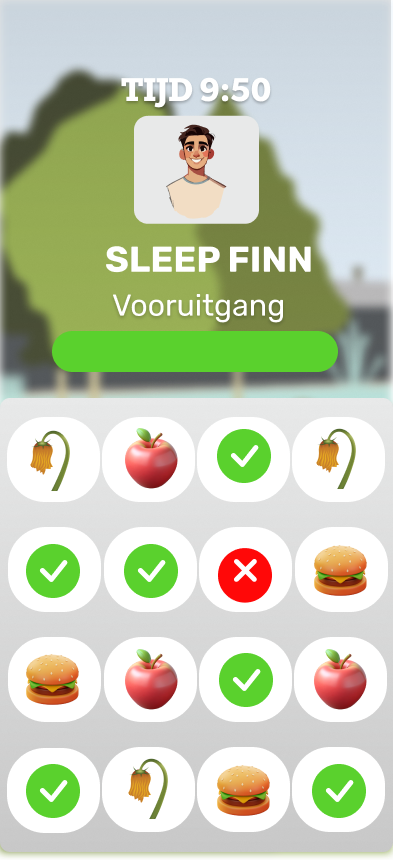
When you arrive at a stop, a mini-game starts. In "Sleep Finn" you sort good food from spoiled food against the clock while a progress bar fills up.
03
One consistent game world
A design guide defined colours, buttons and text once, so every screen and mini-game feels like the same game and stays readable for a broad audience.
Why it works
- Real places in the city make the theme tangible: you play where it matters.
- Short mini-games fit how young people play on mobile: quick sessions with instant feedback.
- A friendly illustrated character (Finn) and clear food icons keep a heavy topic approachable.
Style guide
Colours
Success Green
#5AD12D
Progress, correct answers
Error Red
#FF0000
Wrong answers
Light Grey
#E8E9E9 → #C8C8C8
Game panel gradient
Track Grey
#D9D9D9
Empty progress bar
White
#FFFFFF
Tiles, text on photos
Typography
- TitlesRubik Bold 36px
- SLEEP FINN
- LabelsRubik Regular 30px
- Vooruitgang
- TimerEgyptian Slate Pro Bold
- TIJD 9:50Display font. Shown here in a similar slab serif, as Egyptian Slate Pro isn't available as a web font.
Components
Visual language
A blurred photo of the real location in the background, with a friendly illustrated character (Finn) on top.
Testing & iteration
After our pitch, the lecturers gave feedback on the concept. We reworked it before starting the sketches and wireframes.